The key to a successful office design is to integrate the needs of workers with the aesthetics and functionality of a space.
How Thoughtful Design Can Influence the Purpose of the Office
There’s no question that a sense of purpose is important to employees. In fact, studies suggest that employees value purpose more than they do money. That’s why it’s so important for leaders to understand the role that purpose plays in the workplace and how they can use it to create a competitive advantage for their organization.
A recent study by McKinsey found that businesses with a high sense of purpose outpaced those without one by 134% on key performance metrics like revenue growth, return on invested capital and market share growth over three years.
So what does this mean? If your company doesn’t have a strong sense of purpose, you’re likely losing out on opportunities for growth because you’re not engaging your employees’ minds and hearts at work — both of which are needed in order to be productive and innovative.
0%
Businesses with a high sense of purpose outpaced those without one by 134% on key performance metrics.
Design Offices with Employees' Needs in Mind
The key to a successful office design is to integrate the needs of workers with the aesthetics and functionality of a space.
The best designs are planned, not merely built. A good design process starts with careful planning, where every aspect is analyzed and explored. The goal is to create an environment where people feel comfortable, happy and productive.
The best office designs are made up of several elements:
An open floor plan creates a sense of community and collaboration, but it can also make employees feel like they’re being watched by their colleagues at all times. This can be positive if you want employees to be more collaborative — or negative if you’re trying to foster privacy or focus.
A private space for every employee helps ensure privacy without isolating them from their colleagues or their surroundings. It also provides an opportunity for collaboration when employees need it most. At the same time, it encourages employees to take advantage of their time alone by focusing on work rather than distractions like social media or email alerts that can keep them tied down throughout the day.
Smart Lockers
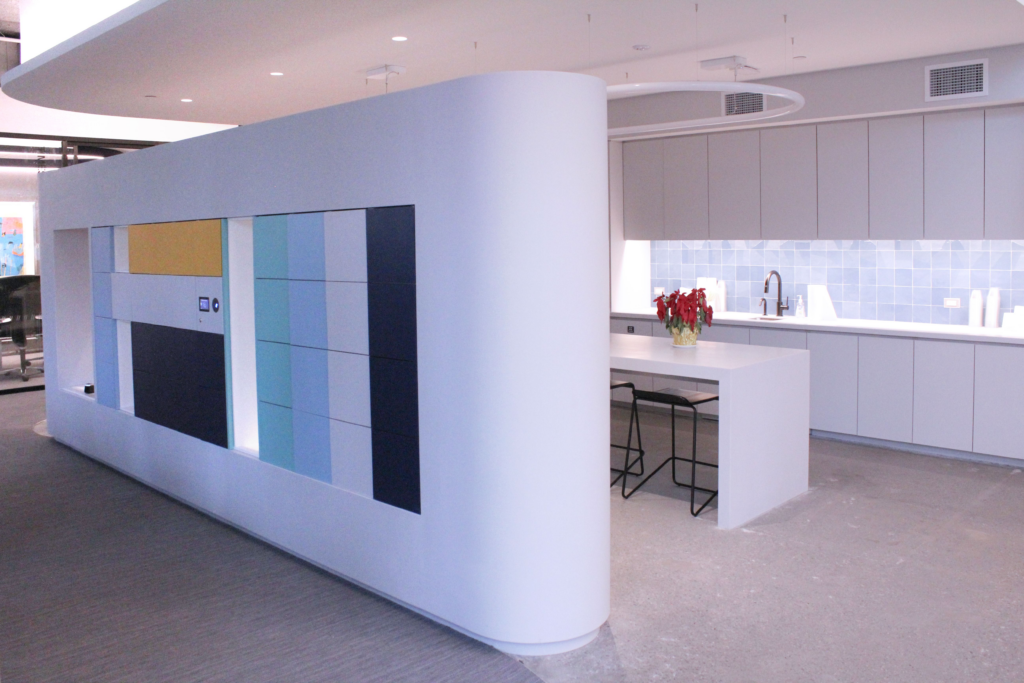
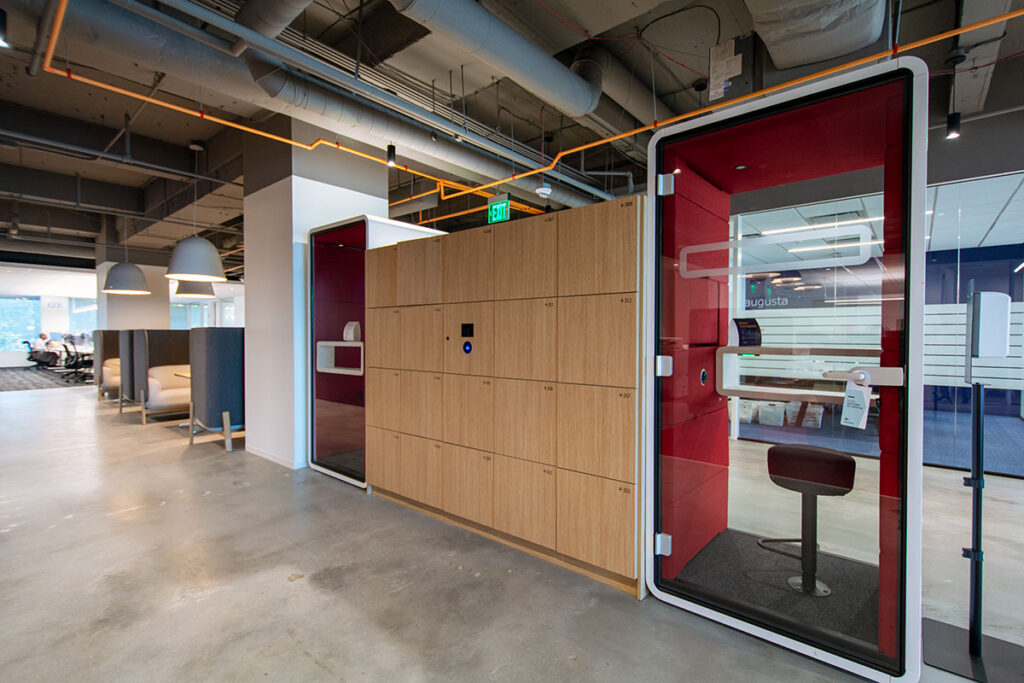
So, how do you find the best of both worlds in an office? Lockers can be a crucial design element to help break up the open office, while providing a private space for employees. They need to be functional, secure and beautiful. But how can you ensure that your lockers meet all of these criteria?
The first step is to understand how people use lockers in a workspace. With smart lockers, you can get real-time data to see how often employees are coming into the office, how the lockers are being utilized and whether or not you need to add more locker banks.
We have seen trends of employees mostly using them for storing their personal belongings when they come into the office, but some people also use them as an extension of their desk space when they are configured into locker islands. These collaborative spaces can be great for brainstorming with teammates or used as a mobile desk when casters are added to the bottom.
In addition to being functional and secure, your lockers should also be visually appealing. They need to look good while still being functional, so it’s important to strike the right balance between functionality and aesthetics. When thoughtfully designed, lockers can be a focal point for the office and represent your brand in a unique and thoughtful way.